Shade plants: hidden gems in the garden
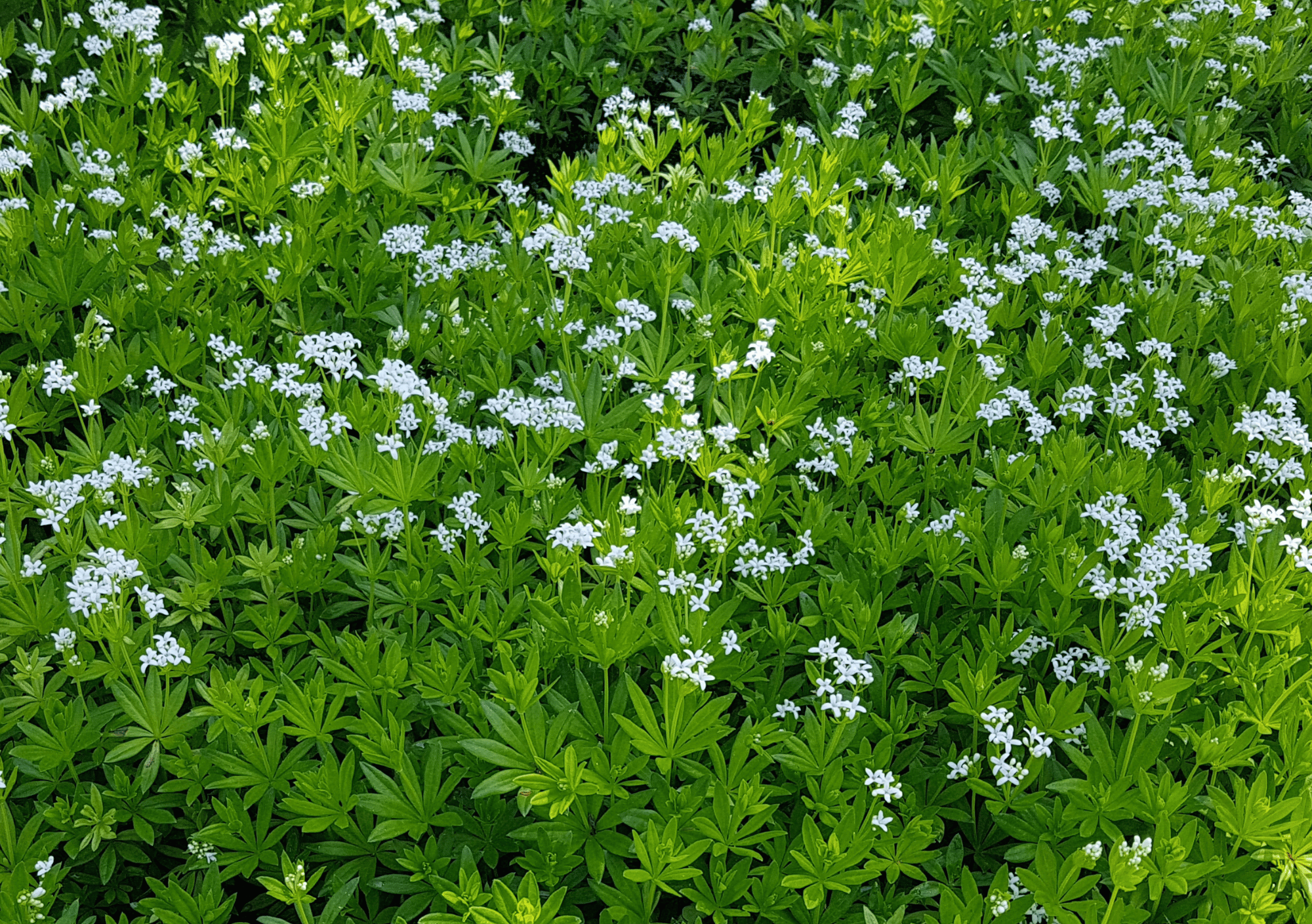
Sweet woodruff (Galium odoratum): a hardy, perennial shade plant that blooms in spring and often stays green through the winter.
Shade in the garden is something to cherish. Yet few people dream of a shade garden. We tend to be cautious about trees and other vertical elements that create shade. Sometimes that one shaded corner is even seen as lost space. But with the right plants, shade can bring light effects, depth and atmosphere to a garden. Moreover, shade plants make the garden stronger and more biodiverse. Time for an ode to shade.
What makes shade plants special
Shade plants have different characteristics from plants that thrive in the sun. For borders in partial shade or sun, there is an enormous range to choose from. In full shade the selection is more limited, but there are still many options, and flowering is certainly possible. Shade plants often bloom in late winter or early spring. We see the same logic in the forest: during that period deciduous trees have not yet developed their leaves, allowing enough light to reach these plants. Edible and evergreen plants can also grow well in shade.
Because there is generally less flowering, we create atmosphere in shade borders create through different leaf textures and colours. The leaves of shade plants are often larger and thinner, enabling them to make optimal use of the limited light. This allows beautifully filtered light to pass through. The male fern (Dryopteris filix-mas) is an example of a shade plant with delicate foliage. It combines well with other perennials in a shaded border. Shade is often cooler and more humid, so many shade plants tolerate moist soil better than dry conditions.
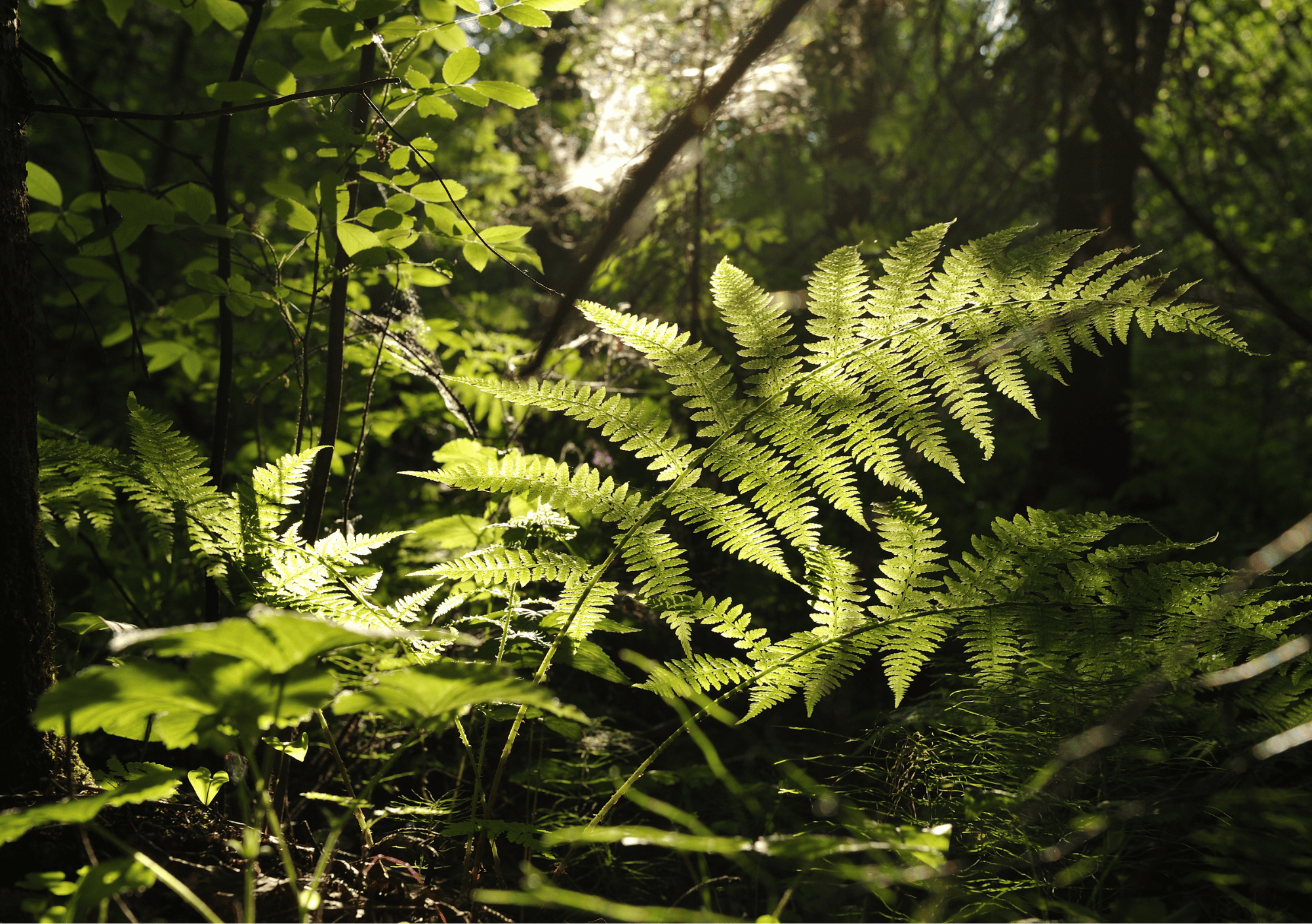
The male fern (Dryopteris filix-mas) in the forest. A beautiful example of how shade plants can bring depth, light and atmosphere.
Shade makes the garden more resilient
Shade creates an additional biotope in the garden: a cooler, more humid microclimate. This provides a valuable habitat for many garden animals. Birds, hedgehogs, frogs, toads and various small insects find shelter in borders and shrubs. Shade plants that flower in spring also support early insects such as bumblebees, bees and hoverflies. Nectar and pollen are still scarce at that time of year, so these plants offer an important food source. More wildlife in the garden creates greater balance and therefore greater resilience.
Shade keeps the soil cooler and more moist, helping the garden withstand drought and heat. Shade plants are therefore often robust and require less maintenance. Many develop strong root systems, enabling them to use moisture and nutrients efficiently. Their roots improve soil structure and strengthen the garden as a whole. Even if there is no natural shade garden, it is wise to create shade. It also makes the garden more comfortable: on hot summer days, the filtered light from a climber or tree can make a seating area feel significantly cooler.
Practical tips for a shade garden
A shade garden requires attention to light conditions, soil and planting. Choose plants suited to partial or full shade, depending on the location. Combine different leaf structures, flowering times and heights. Valuable flowering shade plants that brighten up a border include sweet woodruff (Galium odoratum), oxlip (Primula elatior) and lungwort (Pulmonaria officinalis).
Although many shade plants thrive in moist soil, it is important to ensure good drainage to prevent root rot. Not only the right plants but also the choice of materials determines how robust a garden will be. Consider permeable paving and materials that withstand moisture well. Embrace the shade and work with nature. In this way, every shaded garden and corner adds ecological value and a strong sense of atmosphere.
Every shade garden has the potential to become a beautiful outdoor space. Curious about what’s possible in your garden? Feel free to get in touch, I’d be happy to think along with you.