
3 rare insects and how you can help them in your garden
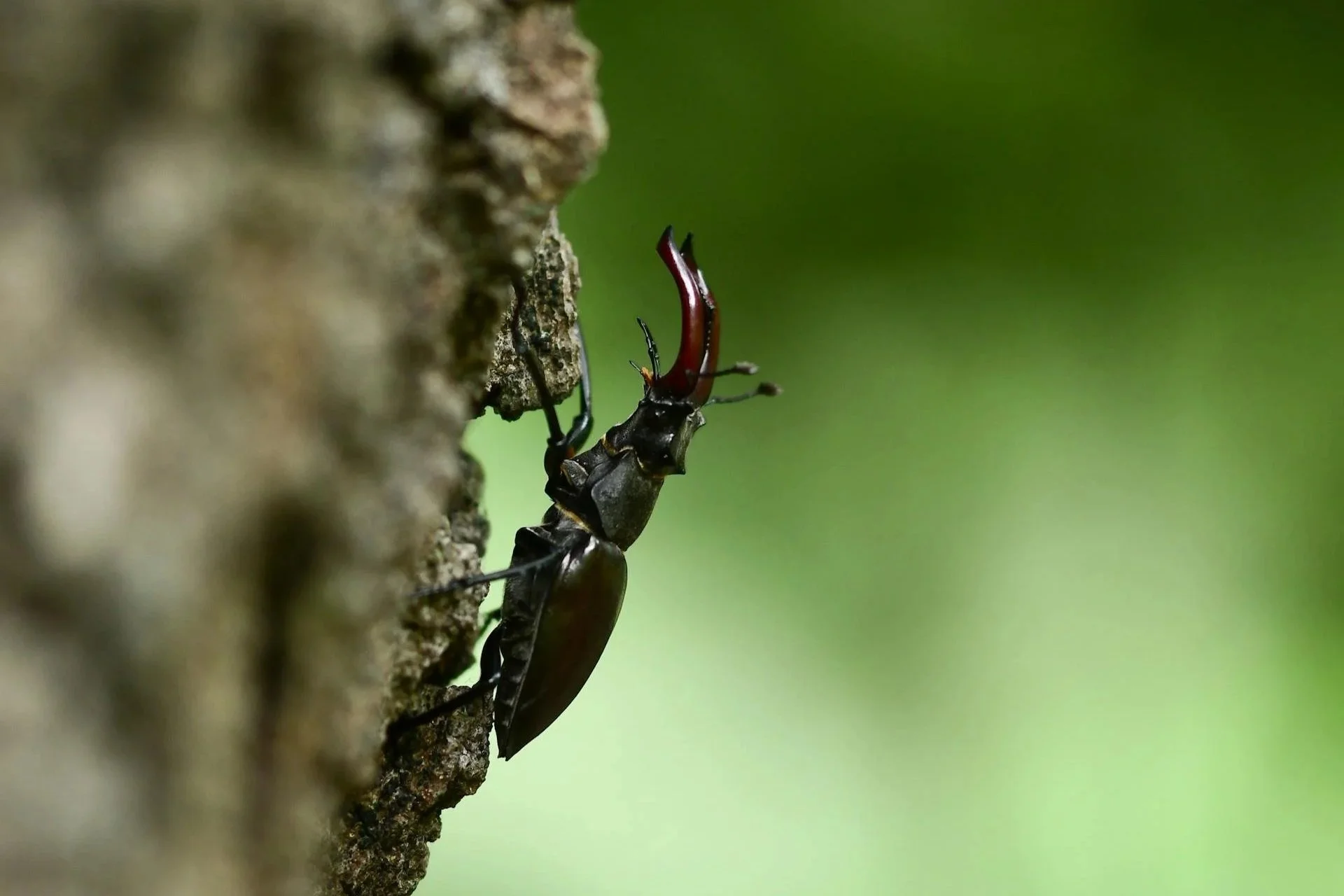
The stag beetle is one of the largest beetle species in Europe
In a green garden, you can enjoy nature all around you every day. But did you know that your (even small) garden can also make a real difference for nature? With an ecological garden, you create a place where not only you, but also the animals in your surroundings, can feel at home. I will take you into the fascinating stories of three rare insects, and how you can help them find a place in your garden.
The stag beetle (Lucanus cervus)
The stag beetle is not a stag, a male deer, but a beetle. It gets its name from the large mandibles that resemble a stag’s antlers. It is one of the largest beetle species in Europe and can grow up to 9 cm long.
The stag beetle lays its eggs only in dead, decaying wood from deciduous trees. The larvae feed for 4–8 (!) years on the rotting wood in which fungi are active. In autumn they pupate, and the following summer they emerge as adult beetles. After mating, the females search for a place to lay their eggs. A few weeks after they have emerged as adults, they die, and the cycle begins again.
How to help the stag beetle
Leave dead wood in your garden or create a breeding habitat. You can do this by partially burying old oak stumps or branches in the ground so that they slowly become colonised by fungi.
The long-horned bee (Eucera longicornis)
The long-horned bee is a solitary wild bee. It is relatively large, reaching up to 16 mm in length. The males are recognisable by their long antennae.
For nectar and pollen, they depend on legumes. The bee has a strong preference for red clover, which is often considered a weed. The long-horned bee nests in the ground, preferably in a gently sloping bank.
How to help the long-horned bee
Plant and sow legumes in your garden, such as red clover and sweet pea. Plants like viper’s bugloss, wild marjoram, devil’s-bit scabious and knapweed will also make this bee very happy.
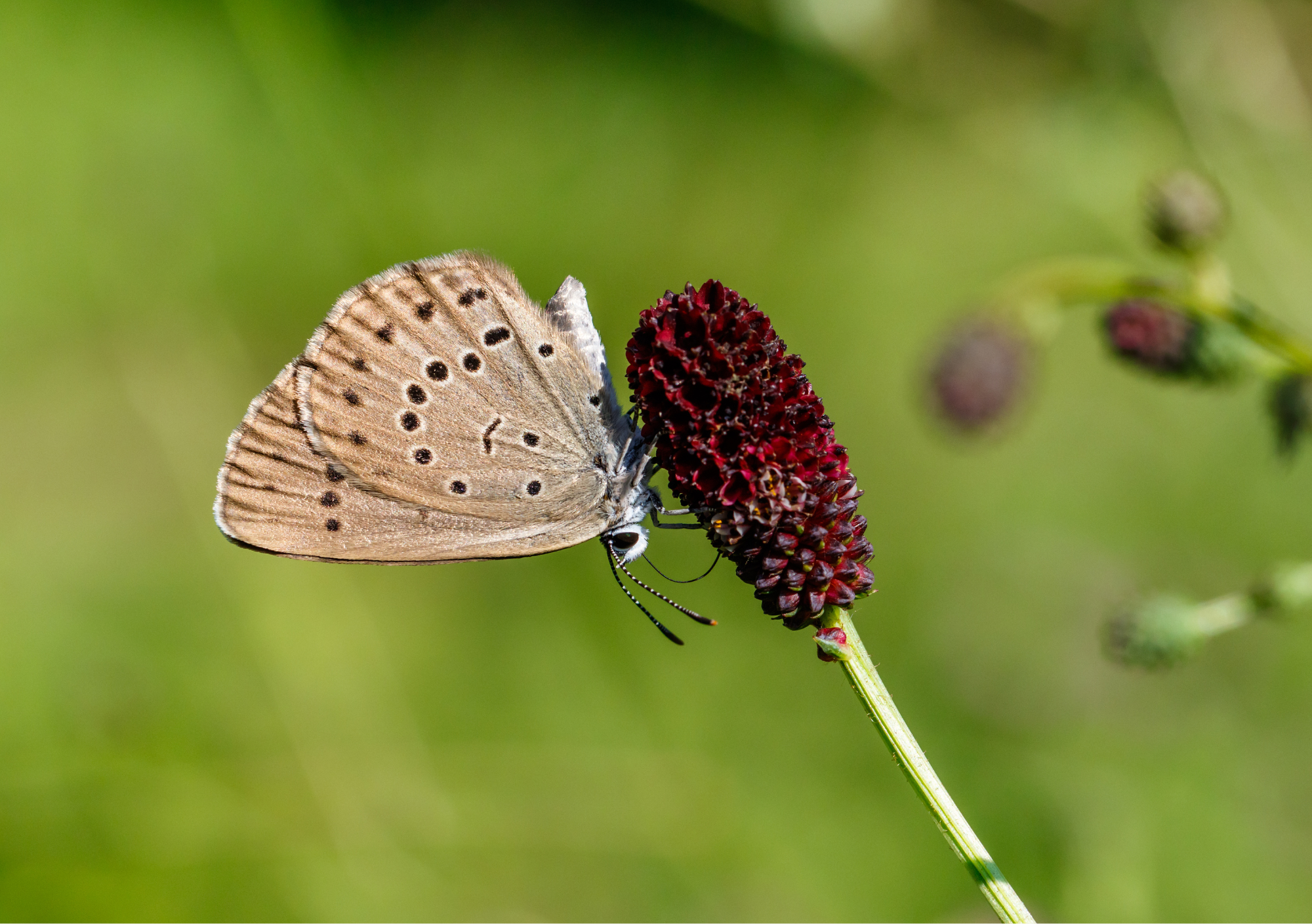
Scarce large blue on great burnet
The scarce large blue (Phengaris teleius)
The scarce large blue is both highly selective and remarkably faithful to its habitat. It lays its eggs exclusively on great burnet (Sanguisorba officinalis) and is also dependent on the myrmica scabrinodis ant (Myrmica scabrinodis). As an adult butterfly, it rarely leaves the area where it emerged.
The caterpillar of the scarce large blue feeds on the flowers of great burnet. After 3-4 weeks, it drops to the ground and waits to be found by a myrmica scabrinodis ant. The ant milks the caterpillar for one to two hours. After that, it carries her back to its nest, where the caterpillar eats the entire ant brood. The caterpillar overwinters in the nest and emerges in spring as a butterfly.
How to help the scarce large blue
Plant great burnet in your garden. It is also a beautiful plant, offering a finely structured winter silhouette. And if you happen to have a myrmica scabrinodis ant nest in your garden, the scarce large blue will make use of it for you. ;-)
Small changes in your garden can already make a big difference for biodiversity in your local environment. Not sure where to start? I’ve created a checklist with six simple, accessible actions you can begin with today.