Test your soil and choose the right plants
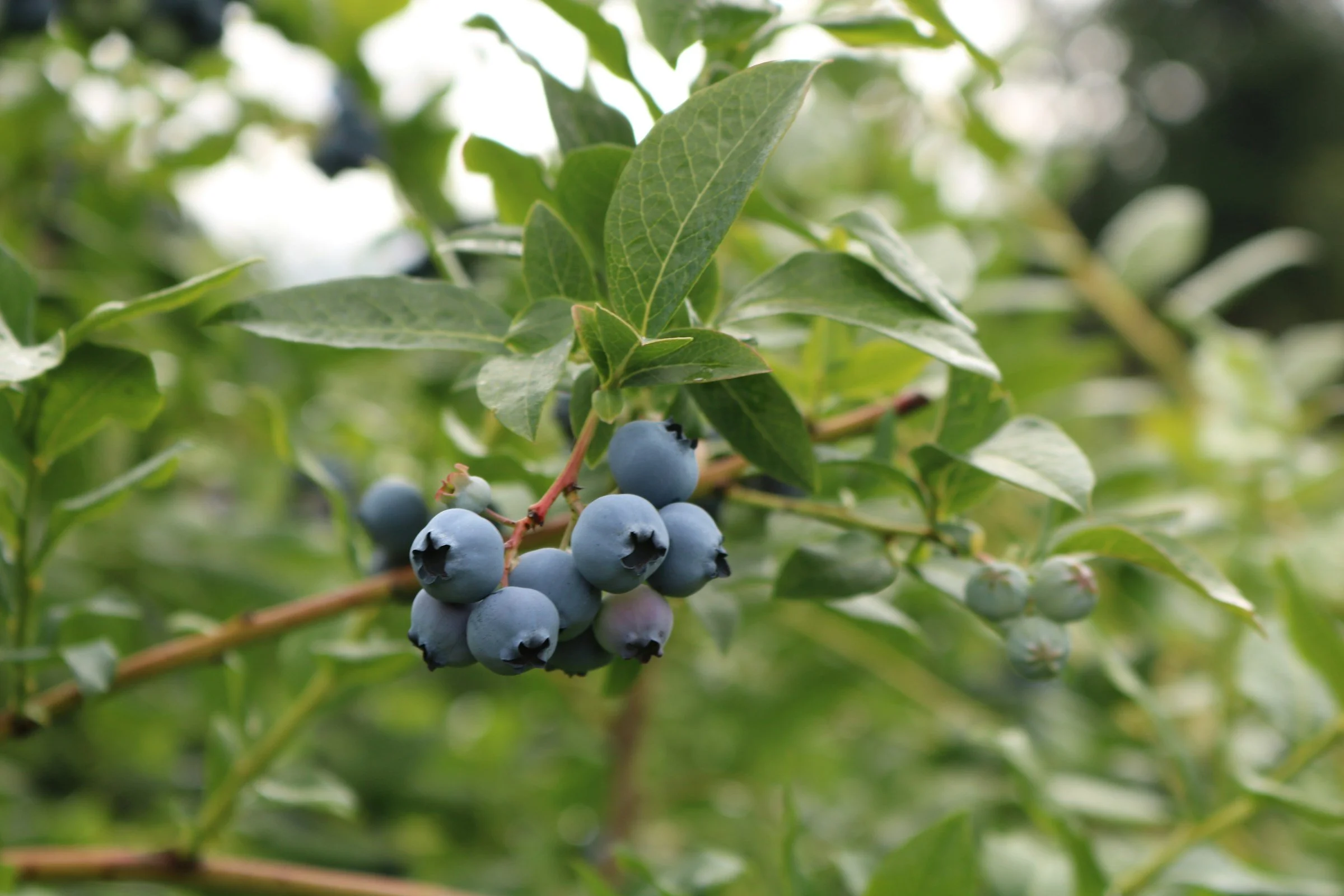
Blueberry (Vaccinium corymbosum) thrives on acidic soil
Why does one plant thrive in your garden while another struggles? There could be many reasons. Maybe Plant A is in a sunny spot while it actually prefers shade. Or Plant B, right next to it, is taking up so many nutrients that there’s not enough left for Plant A. Placing the right plant in the right spot is an art, but the most important factor to consider is: your soil.
Why knowing your soil type matters
Don’t worry—you can create a garden on any type of soil. But not every plant thrives on every soil type. Each soil has its own characteristics, and you could write an entire book about them.
The key thing to know is that light soils (like sandy soil) and heavy soils (like clay) react differently to sun and moisture, creating distinct conditions for your plants. A plant can do just as well in sandy soil in the shade as it does in clay in full sun. For example, coneflower (Echinacea) is often said to only thrive in sandy soil because it dislikes wet roots. In my experience, it can also do perfectly well in clay soil in full sun.
Do the soil test
You can easily test what type of soil you have in your garden. Here’s how:
Fill half of a glass jar (for example, a jam jar) with soil from your garden. Don’t take just the surface layer, dig at least 20 cm deep. If you want to test soil beneath an existing terrace, dig even deeper. Under paved areas there’s usually a layer of fill sand.
Fill the rest of the jar with water. Shake it well and let it sit overnight so the mineral particles (sand, silt, and clay) can settle.
The next morning, read the layers in the jar. Sand settles first at the bottom, silt follows, and clay forms the top layer. If you see roughly equal amounts of sand, silt, and clay, you have loam (see image below).
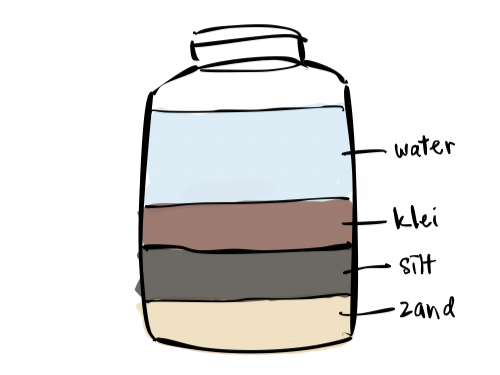
© Studio Jong Baw
What about peat?
Peat is tricky. It contains few to no mineral particles (no sand, silt, or clay) but a lot of organic material (plant remains). This makes it compact, dark, and generally acidic. How does this show up in your jar? Plant remains are lighter than water, so in theory, peat would float on top.
But if the plant remains are waterlogged or contain heavier bits, peat can end up somewhere between sand and clay. It can also break apart or “drift” into the other layers. The most important thing to know is whether your soil is very acidic. Most plants dislike highly acidic soil. Blueberries actually prefer it.
Time to choose plants
Once you have a sense of your soil type, you can start selecting plants. A rough rule of thumb: for light soils (like sand), choose plants that prefer dry to normal soil, and for heavy soils (like clay), choose plants that thrive in normal to wet soil. If you’re somewhere in between (loam), you have the best of both worlds, and many plants will do well.
Don’t forget to consider sun exposure: shade, partial shade or full sun. There are other plant preferences that can increase your chances of success, such as nutrient requirements. There are never any guarantees, but by considering your soil, you’re already off to a great start.
From individual plants to a balanced garden
Once you know which plants suit your soil and location, you can combine them thoughtfully. This is where a planting plan comes in. A planting plan is a scaled drawing of all the borders in your garden, showing the exact placement of each plant. Plants can support each other both visually and in terms of growing conditions. A well-balanced plan considers color, texture, height, and different flowering periods throughout the year.
Would you like a planting plan that matches your soil and garden conditions? Take a look at my services or send me an email for more information.