
5 reasons for an ecological garden
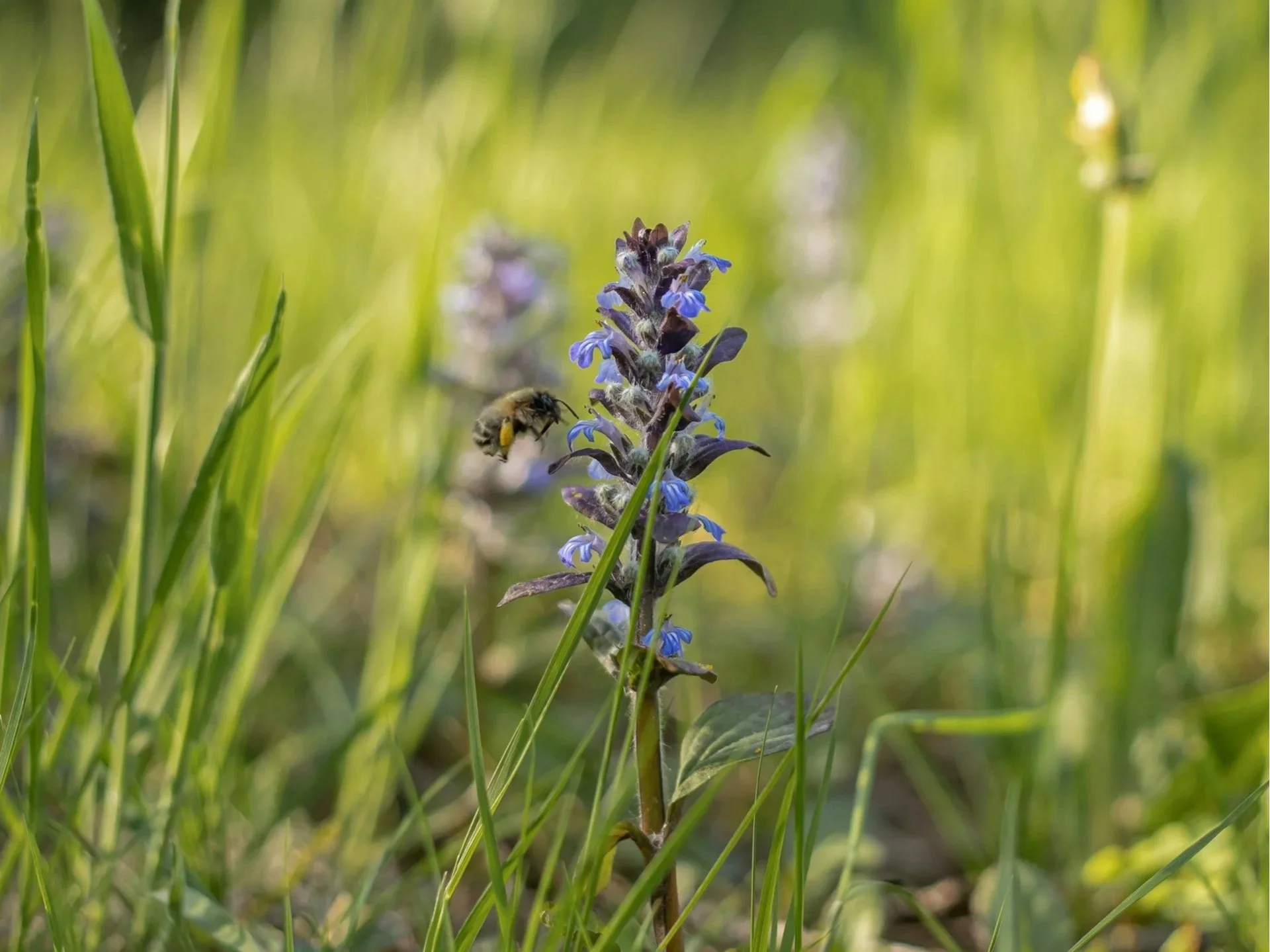
A wild bee visits bugle (Ajuga reptans), an early bloomer for ecological gardens
An ecological garden is a natural outdoor space where both people and wildlife feel at home. It’s a place that is part of the surrounding ecosystem, supporting rare insects in the area. But did you know that an ecological garden also offers a lot of added value for you as a garden owner?
Low-maintenance
Every garden benefits from a little care, but an ecological garden can be a bit wilder. You don’t need to mow all the grass at once, prune spent flowers, or remove fallen leaves and branches. They naturally decompose and turn into compost—gold for the soil life. More nature, less effort.
Such a garden is a paradise for insects, hedgehogs, and other animals. It provides food and shelter for them to hide and overwinter. Birds love the seeds in spent flowers, and butterflies lay their eggs there. The more animals visit your garden, the better. Aphids? Ladybird larvae eat up to 120 per day. Slugs? Birds adore them. A biodiverse garden largely takes care of itself.
Fewer weeds, strong plants
Have you ever seen bare soil in a forest? That’s no coincidence. Bare soil in your garden will not be bare for long. You’ll soon find a plant there (often called ‘weeds’). Bare soil is vulnerable. By keeping it covered, nature protects your ground. Moisture is retained better, and the soil stays cooler in summer and warmer in winter.
That’s why my planting plans always include groundcovers. These are low-growing perennial plants that naturally spread, gradually forming a ‘carpet’ around the rest of the planting. A reliable groundcover that thrives in almost any condition is, for example, periwinkle (Vinca minor). This also reduces maintenance: weeds have less chance, and watering is rarely needed.
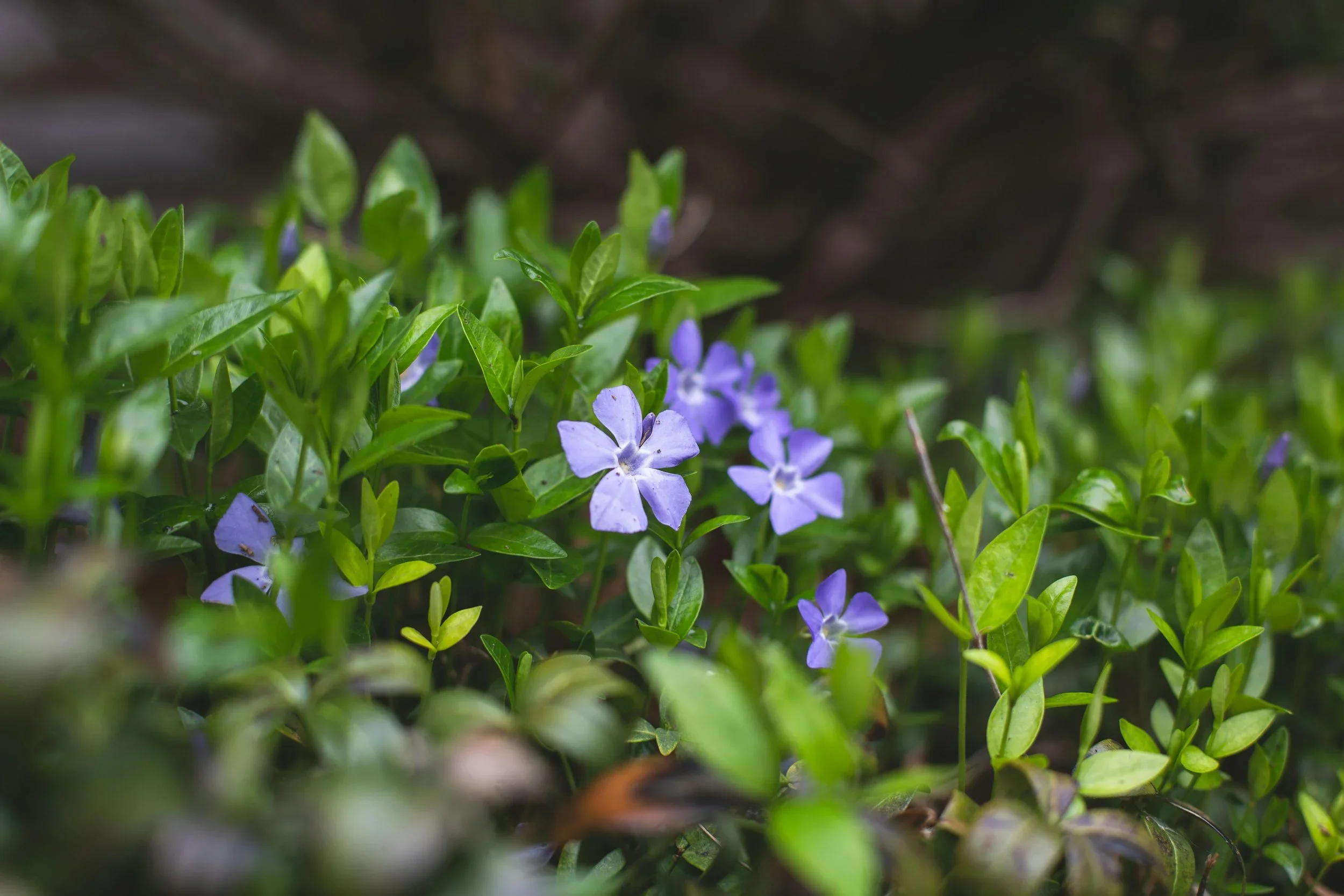
Periwinkle (Vinca minor) is an evergreen ground cover that brings early signs of spring
Beautiful in every season
In my planting plans, I always design for a long flowering season. This means choosing plants that don’t all bloom at once but follow each other, providing great ecological value. Not all insects are active at the same time of year. By having multiple flowering periods, we support different species that would otherwise have to fly (too) far for food.
What does a long flowering season look like? Early spring bulbs announce the start of spring, followed by a series of spring bloomers. In summer, the garden becomes a green oasis full of flowers. In autumn, fall bloomers, grasses, and changing leaves take center stage. In winter, evergreen plants and the silhouettes of spent flowers provide structure and atmosphere. This way, you can enjoy your garden in every season.
Cost savings
As an ecological garden designer, I always choose more greenery and less hard landscaping. Most garden costs are in materials like fences and paving. Of course, you want a terrace to sit on, but how large does it need to be? Paving can be combined with groundcovers, and instead of a fence, you can plant a hedge or climbing plants. The greener your garden, the lower the costs.
Sustainable materials don’t have to be expensive either. Before starting a garden design, I always look for opportunities to reuse existing materials. More often than you think, it’s possible. Last year, I designed a subtle bench for a client, hidden among greenery, built from old garden tiles and topped with wood.
Green is happiness
Nature makes us happy and keeps us healthy—that’s something we sometimes forget. Scientific research shows that people with a tree in their garden are happier than those without a view of greenery. Coming home to nature is important for us.
Not everyone lives near a park or forest, but with a garden, you’re already halfway there. Your garden can be a green oasis where you consciously experience the seasons. A place where children play outside and you pick fresh herbs for cooking. A place to relax and enjoy long dinners with friends and family. In short, a place you call home.
Ready to turn your garden into a place full of life? Take a look at my services or send me an email for more information.